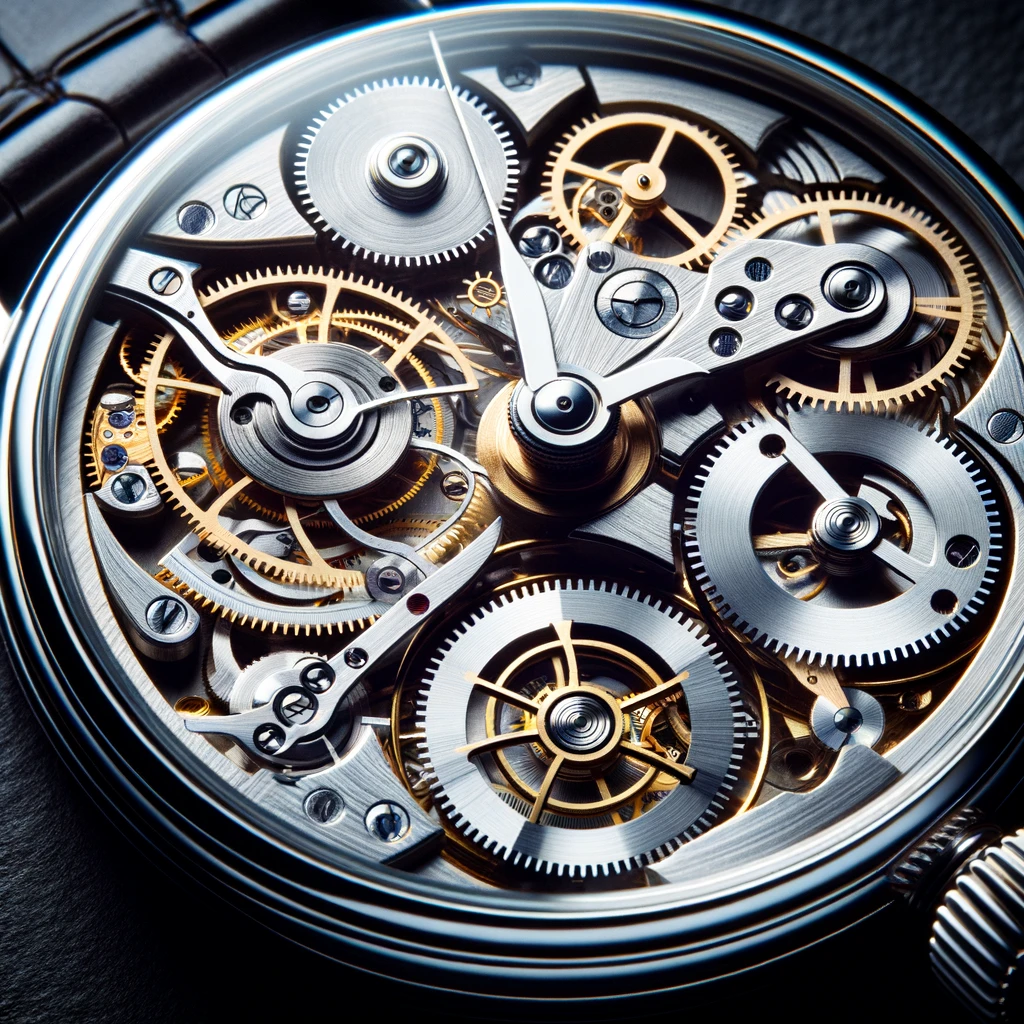
Basic Inner Workings of a Mechanical Watch
Mechanical watches are intricate timepieces, marvels of craftsmanship and precision engineering. Unlike their digital or quartz counterparts, mechanical watches operate through a complex system of tiny gears and springs, all working in harmony. There is just something about them that grabs me and captivates me.
1. The Power Source: The Mainspring
At the heart of every mechanical watch is the mainspring. This coiled spring releases energy gradually to power the watch. When you wind a mechanical watch, either manually through the crown or automatically via a rotor that moves with the wrist’s motion, you are actually tightening the mainspring. As it unwinds, it releases energy in a controlled manner.
2. Transmitting Energy: The Gear Train
The energy from the mainspring is transferred through a series of gears known as the gear train. The gear train’s role is to regulate the release of energy so that the watch can keep time accurately. The gears reduce the speed of the energy released by the mainspring, translating it into a second-by-second movement that can be easily read by the watch’s hands.
3. The Oscillator: The Balance Wheel
The balance wheel, together with the hairspring (or balance spring), constitutes the oscillator of the watch, which functions much like the pendulum in a grandfather clock. This component is critical as it actually controls the timekeeping element of the watch. The balance wheel oscillates back and forth at a constant rate, regulated by the hairspring. Each swing of the balance wheel allows the gear train to move forward, advancing the watch’s hands.
4. Controlling the Timing: The Escapement
The escapement is the component that alternately halts and releases the gear train, allowing it to move forward incrementally and transfer motion to the balance wheel. This interaction helps maintain the balance wheel’s motion and regulates the energy transmitted through the gear train. The most common type of escapement in modern watches is the lever escapement.
5. Displaying the Time: The Dial and Hands
The final components in a mechanical watch are the dial and hands. The hands are directly connected to the gear train and display the time based on its movements. The dial is marked with hour, minute, and often second indicators, providing a user-friendly interface through which the intricate workings of the watch are translated into an understandable time display.
Conclusion
The elegance of a mechanical watch lies not just in its aesthetic but in its functionality and the complexity of its internal mechanisms. Each component, from the mainspring through to the dial and hands, works in a beautifully orchestrated symphony to keep time. Understanding these components not only gives us a greater appreciation for these devices but also highlights the artistry and skill involved in watchmaking. This blend of art and science is what makes mechanical watches a beloved choice for collectors and enthusiasts alike..